
 Share
Share 



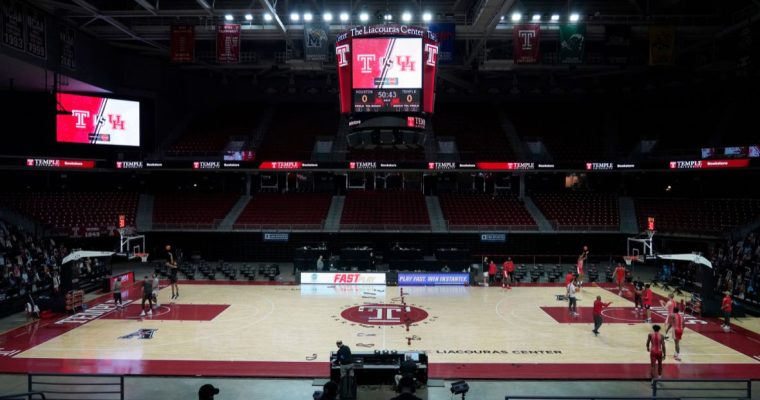
The NCAA has issued penalties to a former Temple men’s basketball player and two former staff members after determining they placed hundreds of impermissible sports wagers, including bets on Temple games.
The case, announced by the NCAA’s Committee on Infractions, raises questions about oversight and integrity at a time when Pennsylvania sports betting is expanding rapidly across the state.
Bets triggered integrity monitoring alert
The violations came to light after a sports-integrity monitoring service flagged suspicious wagering activity on Temple games.
According to the NCAA, the ensuing investigation, conducted jointly by Temple and NCAA enforcement staff, revealed betting activity across multiple seasons by three individuals tied to the program.
Player bet on his own team
Former Temple guard Hysier Miller was found to have placed 39 bets on Temple men’s basketball games, along with three parlay wagers against Temple, between November 2022 and March 2024. The wagers totaled roughly $473.
Because he bet on his own team, a bright-line NCAA prohibition, Miller’s case triggered the harshest penalty category: permanent loss of eligibility. Although Miller is no longer at Temple, the designation underscores how seriously the NCAA treats team-specific wagering.
Former staff members placed hundreds of wagers
Two former staffers were also cited:
- Camren Wynter, a former special assistant to the head coach, placed at least 52 bets totaling more than $9,600, including nearly $2,000 on college football. None involved Temple games.
- Jaylen Bond, a former graduate assistant, placed at least 546 bets totaling roughly $5,600 over nearly two years. Like Wynter, none of his wagers involved Temple contests.
Both cases were processed under updated NCAA betting-violation guidelines that took effect in October 2024, which distinguish between bets on one’s own team and general sports wagering.
NCAA Issues one-year show-cause orders
The NCAA classified Wynter’s case as Level II–standard and Bond’s as Level II–mitigated. Each received a one-year show-cause order, meaning any NCAA school that hires either individual must adhere to additional oversight requirements. Both would also face a suspension equal to 10% of a regular season –about three games – during their first year of employment at a member institution.
Miller and Bond participated in negotiated-resolution processes with the NCAA. Wynter did not.
Importantly for the university, the NCAA did not find that Temple failed in its monitoring obligations or committed any institutional infractions. Investigators determined that the prohibited wagers did not impact game integrity or competition outcomes.
The scandals come out just as college basketball kicked off earlier this, along with a new market, Missouri sportsbooks, set to launch on Dec. 1.