
 Share
Share 



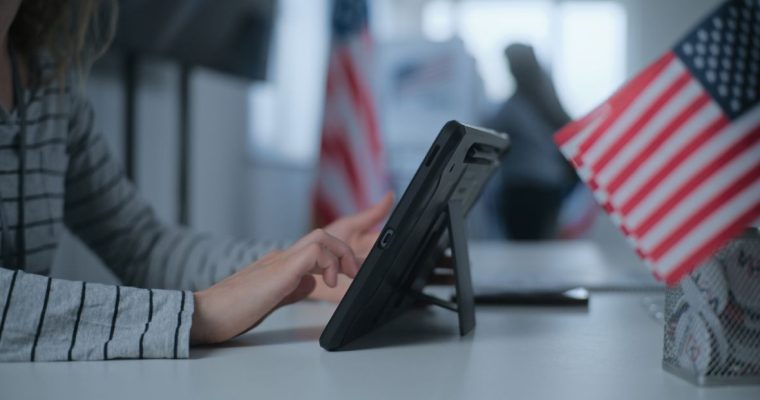
Election workers in Delaware County will now be explicitly prohibited from participating in election-related prediction markets, following a recent update to oath language approved by the county’s Board of Elections.
The change, adopted during the board’s March 24 meeting, clarifies that election officials cannot hold any “direct or indirect interests” in bets or wagers, including prediction markets, tied to election outcomes.
County officials say the move is meant to close what they view as a potential loophole as prediction market platforms continue to expand in the US.
Delaware County Elections Director Jim Allen told PlayPennsylvania on Friday:
“Pennsylvania oaths already prohibited poll workers from having any direct or indirect interest in any bet or wager, and prediction markets are claiming they are neither – which I believe to be a dubious claim.”
The new oath
The updated oath now requires election workers to certify that they “have no direct or indirect interests in any bet, wager, or prediction market related to this election or primary.”
The Delaware County Communications and Public Affairs shared with PlayPennsylvania the new language in the oath, which reads:
“We, the undersigned Election Officials, under penalty of perjury and/or loss of pay, certify that: (1) we followed all procedures under the law; (2) no hand counts of voted/scanned ballots were performed in this precinct, and (3) we have no direct or indirect interests in any bet, wager or prediction market related to this election or primary.”
According to Allen, poll workers are already prohibited from “directly or indirectly” having a financial stake in the outcome of an election.
Delaware County believed it was important enough to add prediction markets to the oath.
Allen told VoteBeat:
“I think they’re a pernicious, horrible factor and I don’t think elections should be bet on in one shape or form. The last thing we need is the referee in elections being accused of having a financial stake in these so-called prediction markets.”
The policy applies to a wide range of election personnel, including judges of elections, inspectors, clerks, and members of return boards responsible for post-election audits.
The controversy of prediction markets
Prediction markets have come to light over the last year, when operators such as Kalshi and Robinhood started offering sports markets in February 2025.
Kalshi and Robinhood are federally regulated by the Commodity Futures Trading Commission (CFTC). Despite offerings appearing to look like traditional sports wagers as seen on Pennsylvania sportsbooks, prediction operators consider actions as financial contracts.
That has caused major controversy across the US. Some states, such as New Jersey and Arizona, have even taken legal action against prediction market operators. Pennsylvania has not done so as of yet, however, regulators spoke against the industry in October 2025.
Pennsylvania Gaming Control Board Executive Director Kevin F. O’Toole said in a hearing:
“By seeking classification as financial derivatives, predictions markets aim to sidestep these crucial state-level requirements.
“This creates an uneven playing field where predictions markets could gain a competitive advantage by exploiting a loophole between federal financial regulation and state gaming law.”
Tying in gambling to elections
The controversy has largely centered on sports markets, particularly whether these contracts function as unregulated sports wagering.
Now, Delaware County’s move signals that concerns are extending beyond sports and into the integrity of elections.
By explicitly banning prediction market participation, county officials are attempting to eliminate even the perception that election workers could have a financial stake in outcomes they are responsible for overseeing.
The resolution also notes support for potential changes to Pennsylvania law that would formally include prediction markets in the state’s longstanding prohibition on election-related wagering.
As prediction markets continue to evolve, Delaware County’s action could serve as an early example of how local governments respond when emerging financial products intersect with election administration.