
 Share
Share 



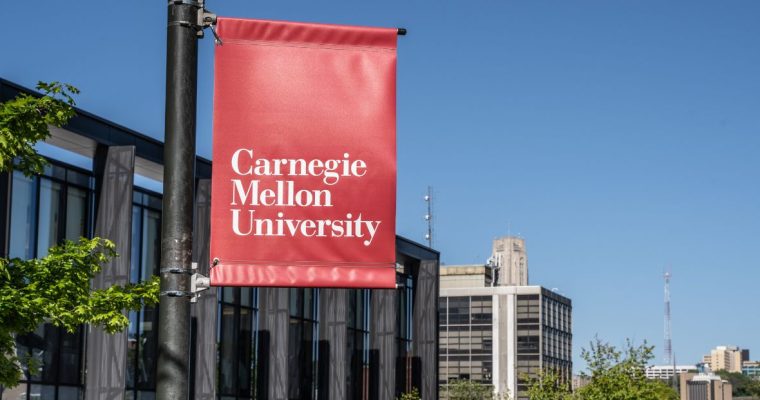
Carnegie Mellon University in Pittsburgh is offering a course in responsible gambling in the spring of 2026, which focuses on the probabilities of sports betting and cognitive decision making.
Linda Moya and Ron Yurko are scheduled to teach the class in the spring of 2026. Moya has a Ph.D. in Psychology/Cognitive Neuroscience and Yurko is an Assistant Teaching Professor in the Department of Statistics & Data Science at Carnegie Mellon.
Pennsylvania offers legal online sports betting within the state. Carnegie Mellon believes it is necessary to offer this class to advocate for responsible gambling.
Rising number of betting college students
Pennsylvania launched online sports betting in 2019, and the vertical has grown ever since. The summer months aren’t necessarily big months in terms of handle. However, during the fall of 2024, handle reached as high as $935.5 million last November.
Carnegie Mellon used research from the NCAA that showed 67% of college students participated in sports betting. The number has likely increased, the university said.
The class is named Grand Challenge First-Year Seminar: Sports Betting, Highs and Lows; Your Brain on Stats, with a course number of 66-155, which indicates a freshmen-level course.
Professors Moya and Yurko are going to address three main aspects, which include:
- Statistics
- Cognition
- Neuroscience
Carnegie Mellon describes the course as follows:
“We will discuss the probabilities underlying the vast menu of sports bets and the difficulties in estimating these probabilities reliably. In parallel, we will consider cognitive biases in decision making, the neural substrates of decision making in the social and emotional brain, and how these processes can change with addiction.
“As part of this class, students will participate in discussions and collaborate on various assignments such as placing bets on real sporting events through a fake sportsbook to actively demonstrate the lessons covered throughout the semester.”
Colleges get serious with sports betting
Universities in Pennsylvania are starting to realize the popularity of sports betting, especially among its students. Carnegie Mellon is taking the bull by the horns and offering a class.
Earlier this year, Penn State University offered a warning to its students prior to the Super Bowl between the Philadelphia Eagles and Kansas City Chiefs.
Penn State has resources for students with gambling addictions. The school listed them in February:
- Counseling and Psychological Services (CAPS): Provides confidential counseling and group recovery options for students.
- Health Promotion and Wellness: Offers a free one-on-one educational service about problem gambling and referrals when necessary.
- Sokolov-Miller Family Financial and Life Skills Center: Provides students with financial planning and guidance to navigate challenges and help make sound financial decisions.
- Student Care and Advocacy: Offers guidance for students facing personal difficulties, including financial concerns.